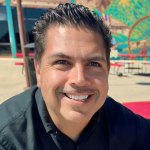

Santa Barbara Unified School District Superintendent Hilda Maldonado on Tuesday night promised to “break cycles” that are not serving Latinx students well.
The California Department of Education says the school district’s rate of Latinx students being classified in special education is too high and a sign of a faulty process that discriminates against Latinx students.
“In many instances, we find that educators may not be paying attention to some of the outside factors, like our depressed socioeconomic conditions that are being brought forward in this COVID time,” Maldonado said.
She said health and educational conditions that people of color encounter have existed for a long time and have not always been recognized by educators.
At issue is whether Latinx students are correctly being identified for individualized education programs, or whether the problem is simply an emergent language issue, and teachers, staff and administrators lack the expertise to understand the difference. The misidentification happens most often in the third grade, according to officials.
Latinx students in the Santa Barbara district are three times more likely to be identified as having a learning disability than other groups, according to the California Department of Education.
That determination is based on the number of Hispanic students with individualized education programs in the category of “Specific Learning Disability” for three consecutive years, in 2017, 2018 and 2019.
“Misidentifying a student as disabled can lower expectations,” said John Schettler, director of special education for the district.
District officials on Tuesday night acknowledged several reasons for why Latinx students are overidentified as in need of individualized education programs. Among them, “conscious or unconscious racial and linguistic biases negatively influence perceptions of student abilities,” and there are gaps in administrator and teacher knowledge.
Solutions on the table include developing “a culturally and linguistically responsive system for intervention when students are experiencing learning challenges,” at a cost of $240,000.
In addition, one of the proposals is to “review and revise district procedures and protocols for assessing Emergent Multilingual Learners (English Learners) referred for special education evaluation. Include a procedure for more clearly explaining special education eligibility to families.”
Officials have identified emergent language learners in second and third grade at Cleveland, Franklin and Monroe elementary schools as students who should not be in special education.
“It is our responsibility to make sure our guidance and support is culturally and linguistically appropriate for families,” Assistant Superintendent Frann Wageneck said.
Reid’s Last Meeting
Several people said goodbye to board member Jacqueline Reid, who was not re-elected in the Nov. 3 election.
The board presented her with a resolution for her term on the board.
Former Superintendent Cary Matsuoka made an appearance to sing Reid’s praises. He credited her with pushing the rest of the board to adopt an ethnic studies graduation requirement.
“I predict your work as a leader and as an educator is not done,” Matsuoka said. “You have too many passions and gifts that you will continue to give. Thank you so much for your service.”
Reid, at times fighting back tears, thanked everyone who supported her during the past four years.
“I appreciate this opportunity,” Reid said. “It’s been a privilege and an honor to be on this board.”
— Noozhawk staff writer Joshua Molina can be reached at jmolina@noozhawk.com. Follow Noozhawk on Twitter: @noozhawk, @NoozhawkNews and @NoozhawkBiz. Connect with Noozhawk on Facebook.