




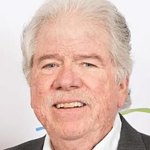
Charles T. Munger, a businessman, investor and philanthropist who was a major benefactor to UC Santa Barbara, died Tuesday, reportedly in Santa Barbara. He was 99.
Munger’s death was announced in a press release by Berkshire Hathaway Inc., where he served as vice chairman and was a close friend, confidant and trusted right-hand man to billionaire founder Warren Buffett.
In a statement, Buffett said, “Berkshire Hathaway could not have been built to its present status without Charlie’s inspiration, wisdom and participation.”
With a net worth estimated at well more than $2 billion, Munger long advocated an investing strategy of pursuing quality companies at reasonable prices, an approach he eventually convinced Buffett to follow, and one that led to Berkshire Hathaway’s success.
In 2014, Munger donated $65 million in company stock to UCSB to fund a housing facility for physicists at the Kavli Institute of Theoretical Physics.
“There is no place like KITP anywhere else — and no better programs — so it’s a great thing to be able to give them a nice home of their own,” Munger said in a statement at the time.
Two years later, Munger proposed spending $200 million to build two massive student housing buildings at UCSB at the site of existing residence halls.
In much of the project, Munger proposed tossing out the typical university cafeteria-style dining commons and instead creating apartment-style units for up to eight people who would share a kitchen and cook together.
Because of the density of the housing, Munger said it would not be possible to put a window in every bedroom.
His plan was to copy what Disney Cruise Line does on some of its ships, creating artificial windows with lighting that resembles “sunlight” to create the impression of a cabin window.
All of these ideas, he said, would create more housing, at a much lower cost.
That plan stalled, but in 2021, a new project was born. What became known as Munger Hall was proposed for a site near Harder Stadium and the UCSB Police station.
At nine stories tall and covering 3 acres, the project was intended to house 3,500 students. The building plans included small bedrooms with artificial lights in lieu of windows, common areas, shared bathrooms and communal kitchens.
Munger, who had no formal architectural training, had insisted, as a condition of his financial support, that his unconventional and controversial design ideas be incorporated into the project.
However, many students and architects have criticized the design of the dorm, calling its windowless rooms “jail-like,” and raising questions about other aspects and its appeal to students.
Ultimately, that proposal faltered as well, and earlier this year the university said it was pursuing a more conventional housing project for the site, at an estimated cost of $600 million to $750 million.
The push for new student housing stems from the campus development plans finalized in 2010, when UCSB agreed to add 5,000 new student beds by 2025, a target it doesn’t expect to meet until several years later.
UCSB Chancellor Henry Yang issued the following statement Tuesday night:
“My wife, Dilling, and I are deeply saddened by the loss of legendary philanthropist and internationally respected businessman Charlie Munger, who was a creative thinker and a generous supporter of universities, including our UC Santa Barbara campus. Our hearts and thoughts are with his family and friends.
“We are profoundly grateful for his friendship these many years, his immense generosity, his passion and his energy, which he brought to so many initiatives for the benefit of our campus to enhance research and learning.
“His contributions will have an enduring impact on our campus. He will be sorely missed.”
UCSB officials did not immediately answer Noozhawk’s questions about the impact of Munger’s passing on current and future donations to the university.
Munger was born on Jan. 1, 1924, in Omaha, Nebraska, to Alfred and Florence Munger. He was educated at Harvard University, where he earned a law degree in 1948.
As a teenager, he worked at Buffett & Son, a grocery store owned by Buffett‘s grandfather, which is how he came to be acquainted with his future investing partner.