




On Sunday, under the blazing desert sun, more than 200,000 people — several dozen from Santa Barbara County — converged on Glendale, Arizona, for the memorial service for conservative activist Charlie Kirk.
The Glendale police and Turning Point USA estimates of in-person attendance were 70,000 in State Farm Stadium and 30,000 in overflow arenas.
More than 100,000 were turned away, and reportedly 100 million watched the live stream worldwide.
We all came to honor Kirk, the 31-year-old founder of Turning Point USA, who was assassinated on Sept. 10 while speaking with students at Utah Valley University in Orem, Utah.
For Santa Barbara, this memorial carried a profound local resonance, tying our community to a man whose faith and fearless conservatism left an indelible mark on America.
Kirk’s connections to Santa Barbara run deep.
Andrew Kolvet, Kirk’s podcast producer who amplified his sharp political insight and unapologetic Christian conviction to millions of listeners, lives here with his wife.

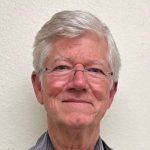
Dr. Paul Aijian at Sunday’s memorial service for conservative activist Charlie Kirk. Credit: Carolyn Aijian photo 
State Farm Stadium in Glendale, Arizona, was overflowing with those who came to celebrate the life and work of Charlie Kirk. Credit: Paul Aijian photo 
Santa Barbara native Elizabeth McCoy and her husband, Mikey McCoy, both work for Charlie Kirk’s Turning Point USA organization. Credit: Paul Aijian photo 
Erika Kirk, Charlie Kirk’s widow, with President Donald Trump. In a heartfelt eulogy, Erika forgave her husband’s murderer. Credit: Paul Aijian photo
Elizabeth McCoy — Turning Point’s administrative events director and the wife of Kirk chief of staff Mikey McCoy — grew up in Santa Barbara, close to her grandfather, Joseph Bondarenko, a Ukrainian minister and refugee who was imprisoned in the Soviet Union for 10 years for his faith.
After several hours of awesome worship music led by a lineup of well-known Christian artists, the service opened with Rob McCoy, pastor emeritus of Godspeak Calvary Chapel in Newbury Park and a former mayor of Thousand Oaks.
Kirk once called McCoy “not just my pastor, but America’s pastor.” McCoy said he initially resisted the title but, facing the sea of mourners, embraced it for that sacred moment.
“With this platform, for this hour, I am,” he said, delivering a simple, stirring gospel message.
He asked believers to remain seated and those ready to accept Christ to stand. Hundreds rose across the stadium — a spontaneous altar call amid grief.
A remarkable succession of speakers followed, each weaving personal stories of Kirk’s impact with bold declarations of their own personal faith.
What stood out was their shared focus on Christ as the cornerstone of Kirk’s life and mission. Many offered clear, unapologetic statements of the gospel, tying their personal transformations to its power and urging the nation to reclaim its spiritual roots.
Benny Johnson spoke of redemption through Kirk’s mentorship and Christ’s grace.
Neurosurgeon and former Housing Secretary Ben Carson declared, “You cannot be the land of the free if you are not the home of the brave.”
Kirk embodied that bravery, he said, fearlessly engaging college students in debate and counsel, driven by his devotion to Jesus.
“What happened in Charlie’s life — and in his death — will trigger a revival across this country,” Carson predicted.
Health and Human Services Secretary Robert F. Kennedy Jr. added a poignant reflection, recalling late-night talks with Kirk about the fear of death amid constant threats.
“It’s better to be true to your beliefs and die with your boots on,” Kennedy said, underscoring Kirk’s resolve to fight for freedom, rooted in faith, no matter the cost.
“I forgive him because it was what Christ did, and it is what Charlie would do.”
ERIKA KIrk
The tributes continued with Christian apologist Frank Turek on defending truth; Jack Posobiec on cultural battles; political commentator Tucker Carlson and national intelligence director Tulsi Gabbard on Kirk’s media courage; Secretary of State Marco Rubio, White House political adviser Stephen Miller, Donald Trump Jr. and War Secretary Pete Hegseth on his political impact; and Vice President J.D. Vance on carrying the torch.
Each speaker, in his or her own way, echoed the gospel’s centrality to Kirk’s work, urging the audience to embrace it as the foundation of a free nation.
Yet the day’s emotional peak came from Kirk’s widow, Erika. Radiant in her grief, she spoke of forgiveness as Christianity’s radical core.
Looking heavenward for strength and fighting back tears, she expressed her forgiveness for the suspect accused of murdering her husband.
“I forgive him because it was what Christ did, and it is what Charlie would do,” she said to a standing ovation.
To nonbelievers, it’s a paradox — forgiving the man who stole her husband and the father of her children. But it’s the essence of the cross: love conquering death.
President Donald Trump closed, embracing Erika onstage and calling Kirk a son-like figure whose mobilization of young voters secured his 2024 re-election — “key to making me the 47th president.”
Admitting his own struggle with mercy, Trump quipped, “Unlike Charlie and Erika, I have a hard time forgiving my enemies. I want to destroy them.”
The crowd roared, then softened as the duo stood arm-in-arm for a heart-stirring finale: “America the Beautiful,” sung in unison by thousands.
My wife, Carolyn, and I felt profoundly privileged to witness this — a tapestry of faith, patriotism, and raw humanity we carry back to Santa Barbara.
Through Kolvet, the McCoys and their local ties, Kirk’s legacy feels personal. We’re praying that this moment becomes America’s turning point: a revival of our Christian roots, where bravery meets grace, and freedom is anchored in faith.
As Kirk often said on the college campuses he frequented, the fight for liberty begins with the freedom found in Christ.
For Santa Barbara’s conservatives — and believers everywhere — this wasn’t just a memorial. It was a mandate to live boldly, forgive radically, and rebuild a nation under God.