
A day after the 67th anniversary of Vandenberg Space Force Base’s inaugural launch, a Falcon 9 rocket blasted off Wednesday to continue the Santa Barbara County military installation’s mission.
A SpaceX rocket, the sixth of the month from the West Coast, lifted off at 7:27 a.m. from Space Launch Complex-4 on South Base.
Minutes later, the Falcon 9’s first-stage booster successfully returned to a droneship positioned in the Pacific Ocean, completing its 30th flight and landing.
The rocket deployed 27 Starlink satellites approximately an hour after departing the Central Coast, according to SpaceX.
The launch occurred a day after the anniversary of Vandenberg’s first-ever liftoff.
On Dec. 16, 1958, a Thor intermediate range ballistic missile blasted off to launch the nation’s West Coast spaceport.
Vandenberg, sitting on California’s elbow, allows rocket launches to occur safely without passing over populated areas.
While Florida launches carrying astronauts attracted more headlines in the early years, Vandenberg’s rockets carried some of the nation’s most top-secret satellite programs for what then was a clandestine agency.
The secrecy surrounding that agency, the National Reconnaissance Office, plus some of the early satellite programs has since been eased.
For instance, the Discoverer Program, dubbed Corona, sent satellites into space for photo reconnaissance missions to collect information about the former Soviet Union’s military strength.
Carried on a Thor/Agena launch vehicle, Corona involved a capsule containing a camera that would take photographs as it passed over Soviet airspace.
Discoverer 1, the first of 38 missions, launched on Feb. 28, 1959, from Vandenberg and became the world’s first polar-orbiting spy satellite.
The program had some early struggles, with 12 failures due to launch, satellite and recovery malfunctions.
Not yet able to beam back live images, Corona’s film reels returned to Earth with parachutes as Air Force crews attempted to retrieve the capsules mid-air.
The program, dubbed “America’s eyes in space,” operated for 12 years and conducted 145 missions before ending in 1972. It remained top-secret until being declassified in 1995.
For decades, the veil of secrecy at Vandenberg often included not announcing upcoming liftoffs to local communities despite the fact the United States alerted the former Soviet Union to avoid being mistaken as a hostile action.
The first mission returned with 3,000 feet of film — more than the entire U-2 spy plane program at that point — imaging 1.65 million square miles of Soviet territory, according to NRO.
Since the 1950s, Vandenberg has conducted more than 2,000 rocket launches and missile tests. The base hit the 2,000th milestone in 2021.
Wednesday’s mission also marked the 70th rocket launch and missile test of 2025 from Vandenberg, according to Space Force officials.
With Falcon flights making up the majority of the liftoffs, the year also saw Firefly and Minotaur rockets launch, along with unarmed Minuteman III intercontinental ballistic missiles and an Army missile.
SpaceX has at least one more Falcon launch planned from the West Coast before the end of the year.
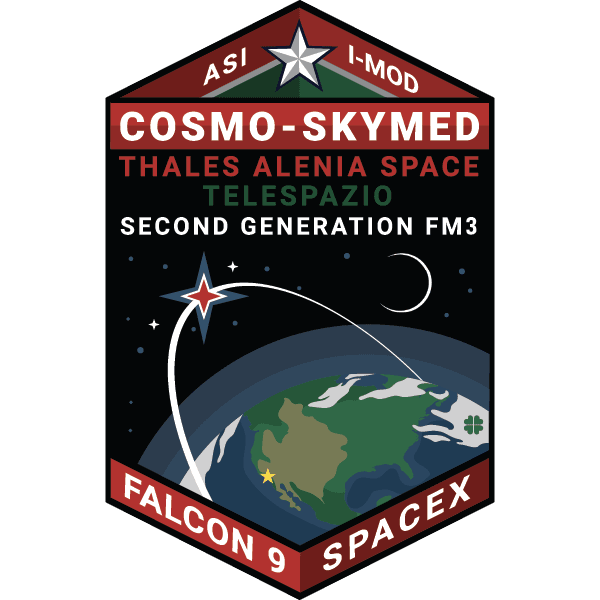
On Dec. 27, a SpaceX rocket is scheduled to launch the COSMO-SkyMed Second Generation mission for the Italian Space Agency and the Italian Ministry of Defense.