


(Michael Moore video)

World Population Day, created by the United Nations “to focus attention on the urgency and importance of population issues,” came and passed on July 11.
The top news results in a quick Google search on the day were all from India. And as the weekend passed, there was barely any acknowledgement in the United States of World Population Day, even as our human numbers ramp up each day.
Earth is home now to nearly 8 billion people, and we add about 81 million people to our only home each year, down from a peak of about 90 million annually in the 1980s. The U.S. population, at 331 million, has more than doubled since 1950 when it was 151 million.
The first World Population Day was in 1989, inspired by the 1987 film, The Day of Five Billion, which put the spotlight on the unprecedented human population growth on the planet.
A graph often referenced in population articles shows how the human population remained relatively stable from 10,000 B.C. for centuries, not reaching 1 billion until the early 1800s. From there, looking at the graph, human population went parabolic.
While birth rates have mostly fallen globally, Earth nonetheless is expected to provide for nearly 11 billion people by the end of this century, thanks to population momentum and regions which still have high fertility rates.
Such a lot of numbers. Do they matter?
Of course they do!
The number of people on the planet — all drawing down the resources of the planet — affects most everything. More people means the need for more food, water, housing, energy, roads and other infrastructure — more resources of every kind.
The more people there are the less for all other species. Habitat loss and deforestation are a major cause of biodiversity loss. And habitat loss and deforestation happen why? Because of man mostly.
As the late University of Colorado physics professor Al Bartlett wrote, “Can you think of any problem in any area of human endeavor on any scale, from microscopic to global, whose long-term solution is in any demonstrable way aided, assisted or advanced by further increases in population, locally, nationally or globally?”
Born in the United States, I have lived in towns and cities from the East to West coasts my entire life, so my view is, understandably, U.S.-centric and that includes an understanding of the impact of population — a learning from an early age when the Zero Population Growth movement was on everyone’s lips.
But the strong voices from the 1960s and ’70s on the need to stabilize population have essentially gone silent in today’s America, with a few exceptions.
Virtually all U.S. organizations that hold themselves out to be environmental organizations have abdicated their responsibility to talk about population and the very real impact on all conservation concerns.
In fact, too many have been more concerned since 2016 with functioning like political organizations as their leadership and acolytes tumble down the rabbit hole of Trump Derangement Syndrome over President Donald Trump’s election.
Several years ago I contacted the deep-pockets Natural Resources Defense Council and asked why it didn’t devote resources to population issues. Their answer was that there were other organizations better-suited to address those issues. Which ones?
And while the Center for Biological Diversity still has a program on “Population and Sustainability,” its online magazine, The Revelator, dropped its population section.
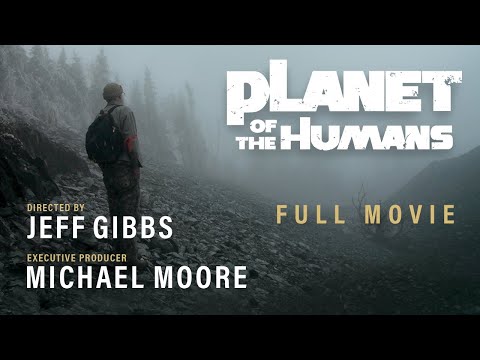
For whatever shortcomings there may be with this year’s documentary, Planet of the Humans, by Michael Moore and Jeff Gibbs, it has revealed the elephant in the room: A lot of environmentalists really aren’t.
When U.S. environmentalists, who should be at the forefront of talking about and presenting solutions to overpopulation but aren’t, it’s a chimera to believe America will be the country to offer the thoughtful, reasonable and education-based solutions to the inextricably connected problems of overpopulation and environmental degradation — in our own backyard, let alone a world of 8 billion or 10 billion or 11 billion people.
— Maria Fotopoulos writes about the connection between overpopulation and biodiversity loss, and from time to time other topics that confound her. Contact her on Facebook at Animal Lives Matter, and follow her on Twitter: @BeTheChangeForAnimals. Click here for previous columns. The opinions expressed are her own.