





On a quiet side street in downtown Santa Barbara stands an official-looking building that houses the Karpeles Manuscript Library Museum.
Within its walls, displayed on multiple levels, is an eclectic and remarkable collection of historical documents, manuscripts, exhibits and artifacts — part of what is believed to be the largest private collection of its kind.
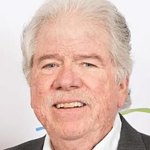
It’s all the work of David Karpeles of Santa Barbara, a mathematician, historian and researcher who died last month at Santa Barbara Cottage Hospital at the age of 85.
Karpeles was born in that same hospital on Jan. 26, 1936.
His family moved from Santa Barbara to Duluth, Minnesota, in 1942 after seeing a Japanese submarine off the Santa Barbara coast, according to his family.
He studied mathematics and physics at the University of Minnesota Duluth, grading cum laude in 1956 with a bachelor of science degree. He continued his studies in mathematics at the University of Minnesota in Minneapolis.
Karpeles subsequently accepted a research position at Remington Rand Univac in St. Paul, then transferred to Remington Rand Univac in San Diego, where he served as the training coordinator between the Navy and Univac.
He completed his master’s in mathematics in 1962 at San Diego State University.
In 1963, Karpeles moved back to Santa Barbara to work as a research analyst for the General Electric Tempo division, and began teaching math at Santa Barbara City College.
While at General Electric, he proposed the use of the first optical character-recognition system for handwriting, and developed an artificial intelligence program allowing personnel to question a computer using unrestricted English language.
Karpeles started investing in real estate in 1968, eventually amassing a portfolio of more than 300 houses.
“Years later,” according to his family, “he offered his tenants creative financing so they could buy the homes they rented, enabling many people to become first-time homeowners who otherwise could not.”
In the late 1970s, Karpeles began collecting historical manuscripts and documents for what grew to be the largest privately owned collection in the world.
The archives include literature, science, religion, political history, music, exploration and art.
Over the years, he established Karpeles Manuscript Library Museums in 14 communities across the country, including the one in Santa Barbara at 21 W. Anapamu St.
The museums are open to both scholars and the general public with no entrance charge.
Karpeles is survived by his wife, Marsha, whom he married a year after they met in 1957; four children, Mark, Leslie (Szumowski), Cheryl (Alleman) and Jason; their spouses, Joann, Tim, Bob and Jennifer; 10 grandchildren, Alexis, Kate, Nick, James, Michelle, Alan, Ethan, Alex, Henry, Isabelle; and his brother, Elliott and wife Donnalyn.
“He led a fascinating and remarkable life that had a positive effect on everyone he met,” according to a statement from his family. “His intelligence, analytical abilities, creativity and humor was a gift to everyone who knew him …
“David was a loving husband and father. His contributions to society will have an everlasting effect.”
— Noozhawk executive editor Tom Bolton can be reached at tbolton@noozhawk.com. Follow Noozhawk on Twitter: @noozhawk, @NoozhawkNews and @NoozhawkBiz. Connect with Noozhawk on Facebook.