Every morning, I pass a remarkable collection of people during my walks through Santa Barbara.
There’s the man nursing a cup of coffee outside a neighborhood café, gazing thoughtfully toward the mountains. The woman walking her Labrador along Shoreline Drive. The retiree tending roses in a front yard. The volunteer setting up tables for a community fundraiser. The Little League coach unloading equipment from the trunk of his car.
Most of us exchange a nod, perhaps a wave, and continue on our way.
What we often don’t see are the stories.
One of those people may have served in Vietnam. Another may have spent months aboard a naval vessel crossing the Pacific. Someone else may have deployed to Iraq or Afghanistan. A grandfather waiting patiently in line at the grocery store may have carried responsibilities at age 20 that most of us can scarcely imagine.
That is what strikes me most about Veterans Day.
The veteran you don’t know.
Not the decorated general speaking at a ceremony. Not the face in a history book. Not the military figure featured in a documentary.
I’m talking about the veteran standing next to you at the farmers market, debating which apples to buy.
Military service can be dramatic.
Coming home usually isn’t.
The uniform is packed away. The medals are stored in a drawer. Life resumes. Careers begin. Families are raised. Dogs are walked. Volunteer shifts are covered. School pickups happen.
Slowly, a veteran becomes a neighbor.
Perhaps that’s exactly the point.
The men and women we honor on Veterans Day did not serve so they could spend the rest of their lives being recognized. Most served because they believed they owed something to a cause larger than themselves.
When military service ended, many returned to the equally important work of citizenship.
One veteran in my circle of friends illustrates this better than anyone I know.
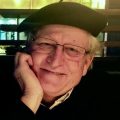
Steve graduated from UC Santa Barbara before serving as an Army lieutenant in Vietnam. During two tours, he earned two Purple Hearts and numerous decorations for valor and service.
Yet that’s not what stays with me.
Several years ago, Steve pulled out his wallet and showed me something I have never forgotten.
Folded inside was a tiny piece of paper.
It wasn’t much to look at. The names were printed so small I could barely read them. At first glance, it resembled one of those scraps most of us would eventually throw away.
But these weren’t reminders or phone numbers.
They were names.
More than 200 names.
Soldiers who served under him, alongside him or near him.
Men who never came home.
More than a half-century has passed since Vietnam, yet Steve still carries those names with him every day.
I remember staring at that tiny sheet of paper and suddenly realizing something.
For Steve, remembrance is not a holiday. It isn’t a speech, a ceremony, or a flag waving in the breeze.
It rides in his wallet.
Think about that for a moment.
Most of us carry credit cards, family photographs, insurance cards and shopping lists.
Steve carries memory. He carries duty. He carries the names of young men whose futures ended while his continued.
He has never forgotten them. And I suspect he never will.
The older I get, the more I appreciate that history isn’t confined to museums or memorials.
It sits beside us in church pews. It waits patiently behind us at the post office. It stands in line at the grocery store studying a shopping list. It walks quietly down State Street.
And sometimes, if we’re fortunate, it shares a morning coffee with us.
The trouble is that history rarely introduces itself.
Veterans seldom begin conversations with stories about firefights, deployments or sacrifices. Most don’t lead with medals earned decades ago.
They talk about grandchildren, aching knees, baseball scores, home repairs or whether we might finally get some rain this winter.
In other words, they become wonderfully ordinary.
Perhaps that’s the greatest success of all.
After enduring extraordinary circumstances, they came home and resumed the work of being neighbors, parents, spouses, business owners, volunteers, coaches, mentors and friends.
They folded themselves back into the fabric of American life so completely that many of us never notice who they are.
Yet the experiences never fully disappear. A folded piece of paper inside a wallet reminds us of that.
More than 200 names.
More than 50 years.
An act of remembrance practiced not once a year, but every single day.
I suspect there are countless Steves living among us.
Men and women carrying stories they rarely tell, memories they never entirely set down, and lessons forged through service that continue to shape the communities they call home.
Here on the Central Coast, veterans are woven into the fabric of everyday life.
They became teachers, nurses, attorneys, entrepreneurs, first responders, public servants, volunteers, mentors and neighbors.
They coached soccer, attended school board meetings, joined service clubs, raised families, paid taxes, and helped build the communities we enjoy today.
Most never asked for recognition. They simply kept serving in different ways.
This Veterans Day, perhaps the greatest tribute we can offer isn’t simply a thank you.
Perhaps it’s curiosity.
Take a moment. Start a conversation.
Ask a veteran where they served.
Ask what they remember.
Ask what they miss.
Ask what they learned.
Then be prepared to listen.
Not because every veteran’s story is about war. Because every veteran’s story is about life.
And in a time when we seem increasingly eager to talk and increasingly reluctant to listen, there may be no better way to honor service than by giving someone the chance to be heard.
As for me, I’ll continue my morning walks through Santa Barbara, passing familiar faces along familiar streets.
And I’ll wonder which of those neighbors once stood watch on a distant shore, flew through a hostile sky, crossed an unfamiliar desert, or carried burdens most of us will never fully understand.
Odds are, more than a few.
The veteran you don’t know may be the person you wave to tomorrow morning.
And if you’re lucky enough to stop and ask their story, you may discover that the distance between history and ordinary life is only the width of a sidewalk.
That seems worth remembering.
Especially on Veterans Day.