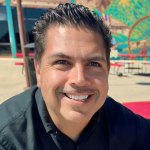

It takes a lot to upset Roger Durling.
The longtime executive director of the Santa Barbara International Film Festival reached his limit, however, at Monday night’s State Street Advisory Committee meeting.
“I feel very, very frustrated,” Durling said. “I feel that the city deserves better. Years from now, we are going to be judged by what we did, and right now, this is lacking and it’s not visionary. It’s not bold.”
Durling, who at one point said it was hard for him to speak in that way because he is very shy, added that “sitting around deciding about lanes and all this stuff, that is just cosmetic, and it is not visionary, gang.”
His comments encapsulated the beliefs of some committee members Monday night. After three years of meetings, the group was still divided and unable to reach a consensus on the issues facing State Street. The committee took a series of rushed straw poll votes, but the meat of the meeting came during the comments from the members.
Durling said he withstood three years of meetings, but he never had an opportunity to speak on the actual issue. Instead, he said he watched city staff drive the process.
“We have never been allowed to have an open discussion about our ideas, and exchanging ideas, and exchanging visions,” Durling said. “We have had three years of presentations upon presentations.”
The City of Santa Barbara three years ago began an effort to create a State Street Master Plan. The Santa Barbara City Council, led by former transportation and parking supervisor Rob Dayton, voted to abruptly close nine blocks of State Street during the COVID-19 pandemic. Four years later, the area is still closed to vehicles.
City staff and the 17-member advisory committee are charged with making recommendations to the City Council. However, Monday’s meeting was frazzled, with several members of the committee expressing various levels of disappointment with the process.
Commissioner Ed Lenvik left no room for interpretation. He called the whole process “bizarre, really bizarre, guys.”
“We’ve got problems,” Lenvik said. “We really got problems, and if we pass on this thing, we are going to have problems for a lot of years.”
City staff asked the committee members to take “straw” votes on nine separate questions. Committee members — 13 present and two online — raised their hands to signify support or opposition to questions such as, “Do you support the curbless, flat and flexible design for the 500 and 600 blocks of State Street?”
On that question, eight of the members voted yes, but three hands went up for “yes, if” and one for “no.”
Committee chair Dave Davis said he could support “flat and flexible” for those two blocks “if” bicycles weren’t allowed.
“I want it to be pedestrian only,” Davis said.
Some members of the committee said State Street had become a bicycle thoroughfare.
Davis, the longtime Community Development director for the city, chaired the committee. It was his 76th birthday, and at the end of the meeting, those in the room sang “Happy Birthday” to him. However, the mood was less celebratory when Davis began his comments.
He said it was his goal to carry out former Santa Barbara Mayor Hal Conklin’s vision, which was to create a sense of place, history and celebration.
“I carried that forward, and I was hoping that by this point in the process, we’d have a fully developed draft plan addressing land use, housing, mobility, homelessness, economic development, etc.,” Davis said. “That was the plan, but we didn’t get it.”
He said the process “fragmented.”
“We did a little policy back there. We’re doing a little mobility today,” Davis said, adding that the committee should have called a “timeout” and let the “professionals” draft the plan. “But unfortunately, looking at Hal’s vision, I can’t find it in the words that have been developed today. I can’t see it in the drawings and the pictures that have been developed to date. Personally, I am disappointed.”
City staff had presented a plan that called for the 500 and 600 blocks to be flat, flexible and curbless. The streets would have 20-foot-wide, car-free lanes for bikes, pedestrians and transit, and 60 feet for pedestrians, dining and performers.
The 700 to 900 blocks would be flat, flexible, curbless and “pedestrian-prioritized.” Vehicles for loading and delivery would be allowed during early hours. Bikes would be allowed but with “walk your wheels” options for certain times, such as Old Spanish Days Fiesta.
The 1000 through 1200 blocks would have one-way vehicle travel, two-way bike lanes and a larger sidewalk for pedestrians, exhibit space and dining.
The 1300 block would have two-way vehicle lanes, two-way bike lanes and some type of “gateway” between Upper State Street and the downtown core.
Committee member Kristen Sneddon, who said she supports a “people-centric” downtown, not a “car-centric” downtown, expressed concern that there was no summary of the previous meeting three weeks ago, when members broke up into workshops to talk specifics of the plan.
“I would like to see the full written document — the outcome of the small groups. There was so much good work in there,” Sneddon said. “You could really see this framework taking shape. We, the committee, haven’t seen that. I would like to see the full picture.”

Sneddon said she also wanted to see the full architectural renderings from Fred Sweeney, who drew up block-by-block plans for State Street before taking a straw poll vote. They were never showed at the meeting, nor the report from the small groups.
Committee member Meagan Harmon, however, supported a straw poll vote to at least answer some fundamental questions about what State Street should be, before getting too deep into specifics.
She said the committee needs to answer the “meat and potatoes” questions, and although “Mr. Sweeney’s work is absolutely beautiful, I don’t see its relevance to us as a committee until we identify the answers to these questions.”
She said the city needs to first decide the function of the blocks.
“I don’t see how any watercolor, or drawing, or even the narrative written by our staff is really going to make a difference to me. These are the fundamental questions that need to be answered,” Harmon said. “All the other stuff needs to be predicated on these decisions, not the other way around.”
City staff plans to summarize the work of the committee and then take the issue to the City Council at the end of August. Chair Davis also suggested that Sweeney’s drawings be released publicly.
City Administrator Kelly McAdoo said it would take six to 12 months to draft the State Street Master Plan, and then it would go to the City Council for a final vote.
Durling said he hopes the talent of the committee members doesn’t go to waste.
“I hope that at some point we can use this committee the way that it should have been used — to discuss big ideas and big plans and how we envision Santa Barbara in the future,” Durling said.
Below is a list of the straw poll votes, courtesy Tess Harris, State Street Master Planner.
- Do you agree that the “Grand Paseo” design framework, which includes a pedestrian core district bracketed by districts on either side that employ different approaches to mobility, aligns with the SSAC’s vision for the study area?
Yes/Yes if: 12
No: 0
- Do you support the recommendation of a curbed design for the 400-block that allows for all modes of transportation and transforms the block into a gateway to the Grand Paseo?
Yes/Yes if:13
No: 1
- Should the 400 block include physical features or monumentation to signal arrival to the district?
Yes/Yes if: 12
No: 1
- Do you support the curbless, flat and flexible design for the 500 and 600 blocks of State Street? This design includes a 20’-wide clear area for emergency access, that would be shared by bikes and transit, and no private vehicles would be allowed outside of service and delivery hours.
Yes/Yes if: 12
No: 1
- Do you support the curbless, flat and flexible pedestrian-exclusive core on the 700 and 800 blocks of State Street? This design includes plaza-like spaces, allows for festivals and special community events, and is exclusively for pedestrians at all times, even if excluding bike and vehicle access requires that capacity for bikes and vehicles be provided elsewhere on surrounding streets (e.g., Chapala).
Yes/Yes if: 4
No: 9
- Do you support the curbless, flat and flexible primarily pedestrian core on the 700 and 800 blocks of State Street? This design includes plaza-like spaces, allows for festivals and special community events, and is exclusively for pedestrians during special events, days of the week with high pedestrian traffic, and during peak seasons (e.g., weekends and/or Summer)? This time-based solution to create an exclusively pedestrian core may not require the bicycle reroute.
Yes/Yes if: 10
No: 3
- Do you support a curbed design for the 1000 to 1200 blocks of State Street that reintroduces cars and private vehicles to State St at Carrillo St? If so, do you support the recommended design that includes expanded space for pedestrians and outdoor dining, a separated two-way bicycle facility, and a one-way vehicle lane with limited loading and/or drop-off locations?
Yes/Yes if: 7
No: 7
- Do you support the recommendation of a curbed design for the 1300 block of State Street that always allows all modes, and emphasizes its role as an emergency access corridor and a primary gateway to Upper State? This design includes two-way vehicle traffic, a bicycle facility, and pedestrian space on the sidewalk.
Yes/Yes if: 12
No: 2
- Do you support a transit option connecting the Grand Paseo to the Waterfront that includes a full-size circulator shuttle that primarily travels on Anacapa and Chapala Streets and is supplemented by a pedicab program or micro-transit on State Street?
Yes/Yes if: 14
No: 0