

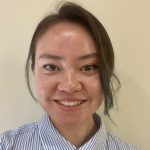

Sixteen-year-old Kavya Suresh ran for student board member for the Santa Barbara Unified School District to learn how things run in her community. However, throughout her term, she has brought change to the district, learned how to advocate for herself and encouraged her peers to do the same.
The San Marcos High School junior is the second-ever student board member for Santa Barbara and the recipient of the Firebrand Award for being a youth who has made an impact in her community, during The Fund for Santa Barbara’s 29th annual Bread & Roses event in October.
Throughout her time as a board member, Suresh has helped introduce ethnic studies into the district’s high school classrooms, worked to reduce police presence on school campuses and advocated for students to make their voices heard in the district.
“A lot of students have come up to me and said that they feel very grateful because they feel like they have a friend on the board,” Suresh said. “People have told me that they feel comfortable, and that’s like the best compliment you can ever give me.”
The student position was introduced by Superintendent Hilda Maldonado, who brought the idea of a student representative from the Los Angeles Unified School District, Suresh said.
“Part of the role is also recognizing you can only represent so many voices,” she said, “and I think it’s important that we keep giving space to different people, with different perspectives.”
Although the student board member does not receive a stipend for serving, they are given elective credit. However, since Suresh has already fulfilled that credit from a different class, she said the credit does not apply to her. Suresh ran for the position because she felt it was the most direct way to make a change.
“The board gets to choose like the actual policy,” she said, “and so it’s like, if you get to influence the board, then you’re influencing what they approve, you’re influencing what actions they take.”
Suresh said she became more interested in learning how the school system works, and she worked to increase transparency between students and the district.
“I think sometimes people don’t even know the items that are being approved. So they think that people aren’t doing anything, but they are doing things — it’s just not clear,” Suresh said. “So, I kind of wanted to improve that accessibility and help people understand like, no, we are taking steps for mental health. We are taking steps for racial equity. You just might not see it because board meetings aren’t the most youth friendly.”
Although Suresh doesn’t get a vote when it comes to district policy, she gets “preferential voting,” which is a symbolic vote she makes on behalf of what students would vote for. She also is allowed to comment on items that may sway the board members’ positions. However, like a board member, she attends meetings, conferences, events and trainings as a member of the school board.
Part of Suresh’s role includes a report she makes where she spotlights the student perspective. She also helped facilitate the superintendent’s Student Advisory Council, which is a group of about 20 students made up of all the high schools in the district who advise the superintendent on what issues are important to students and how they can address them.
“I’ve learned that you will not be able to represent every single person or advocate for every single person. But that wasn’t your responsibility in the first place,” Suresh said. “Your responsibility was to create a space in which people can advocate for themselves.”
Suresh is involved in several community groups focused on social change. She said two issues that are important to her are ethnic studies in school and school safety. She organized with a group of other students to get police officers off of school campuses permanently.
Suresh also helped emcee a community forum on ethnic studies in the classroom. Last October, Gov. Gavin Newsom signed Assembly Bill 101, which requires that California high schools offer at least one semester course of ethnic studies starting in the 2025-26 school year. The bill also requires students beginning with the graduating class of 2029-30 to complete one semester of an ethnic studies class as a graduation requirement. However, Suresh and her friends worked to implement ethnic studies in the classroom before the state mandated it.
“We were like five years ahead of them,” Suresh said.
She said members of the community were upset about ethnic studies being taught in public schools.
“There have been a lot of people who questioned my ability to be on the board by saying I’m very political because of what I’m involved in,” Suresh said. “I don’t think I’m being political. I think I’m just being considerate and empathetic of everyone.”
Suresh said she also feels pressure to achieve despite the accomplishments she’s made thus far.
“I felt like for whatever reason that I was always disappointing somebody, and I think part of that relies on being a woman of color. You always feel like you’re disappointing somebody for whatever reason, but then, you know, being on the board, a board that’s just full of powerful women, and then seeing so many people in the district that look like me, or that have experiences like me, like I’ve come to realize, I don’t owe that ‘perfection’ to anybody.”
Following her term, Suresh said she hopes to continue being involved with student advocacy and leadership for the rest of her time as a student in the Santa Barbara Unified School District. She also said that in order to carry out her position on the board, she had to have confidence in herself.
“I think we’re often taught that you have to say something, the right thing all the time,” she said, “and the ‘right thing’ is usually the thing that the dominant people want you to say and so realizing that you don’t owe it to anybody to say anything. You owe it to yourself.”