

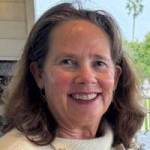

When she was about 10 years old, I asked my daughter what she wanted to be when she grew up. She envied her grandparents’ penchant for travel, and quickly piped up, “I wanna be a grandmother!”
Being an elder is indeed a privileged occupation. My lived experiences give me a wisdom appreciated in my nonprofit board work. I can make time for new adventures and hobbies like tai chi, yoga, or growing veggies from seed.
I’m thinking of taking a botanical drawing course the next time one comes up at the Botanic Garden.
This month I turned a new decade. Surely this is a rightful occasional for formulating goals. I have some draft ambitions, but please don’t hold me to them.
One idea is taking an anatomy and physiology course or two online. I have never been particularly curious about the machine I’ve been driving for many decades, but now I want to understand better how it works and how to care for it.
Doctors and physical therapists have been informing me that some of my body parts are herniated, torn, or worn out and arthritic.
That’s made me realize my understanding even of body terminology is along the lines of the skeleton song: “the knee bone’s connected to the hip bone and the hip bone’s connected to the thigh bone.” Hence, anatomy 101.
Another goal is to write gratitude letters to family and close friends. I was raised in a small suburb with loving family and friends, and live in a larger village of friends and family who embrace me now.
I can never thank them enough, but I can consider and share how each has affected who I am today. I hope each note will be a blessing to the receiver. I know I will receive a multitude of good from writing them.
This assurance I acquire from the Stanford Center on Longevity. SCL’s Nancy Davis Kho writes of her own gratitude project:
“By cogitating all week on reasons I had to be thankful to someone in my life so that I could document those in their [gratitude] letter, I unwittingly trained my brain to stay more alert to positive than to negative forces in my life.”
Kho’s research found that gratitude improves sleep and strengthens relationships. Expressing gratitude leads to greater life satisfaction, improved mental health, and lower rates of anxiety and depression.
Studies out of Stanford and Harvard indicate gratefulness can even add to longevity.
My third potential goal may be the most difficult: acceptance of things I can’t change.
One is my height. I’ve always been self-conscious about being vertically challenged — and now I’m getting shorter. My grandkids are passing me in height before they’re even teenagers.
I am determined, going forward, to be grateful for the advantages of small stature. I have relatively more leg room on flights. I can slip into a room unnoticed if a care to. I can wear my grandkids hand-me-ups.
I am accepting and even appreciating aging.
My mom passed away recently at age 95 from complications of dementia. The dispiriting process made me a bit fearful of the possibility of developing dementia. But if I can accept this as a tolerable potential future, I can be grateful for loving friends, family, and professional caregivers who would help me move through with grace instead of obduracy.
But that’s later. For now, I am traveling almost as much as my jet-setter parents did at this age.
My daughter is busy with kids. When she gets discouraged at the stress of raising teens and tweens in this chaotic world, I remind her she’s growing older and wiser. If her kids have kids she’ll get her dream job.
For now she is halfway to grandmother.